Seventy-Four Years and Full Honors: Laying My Grandparents to Rest at Arlington

Last week, I loaded up the family and drove back to Northern Virginia to celebrate the lives of my maternal grandparents and lay them to rest at Arlington National Cemetery.
The service was scheduled for a Wednesday morning, which meant pulling the older kids out of school for the road trip from Tennessee. Fortunately for us, our two youngest are homeschooled, which made logistics considerably easier.
Standing on the grounds of Fort Myer and Arlington with my wife Danielle and our kids, watching the horses, the uniform brass, and the immaculately synchronized ceremonial team, was one of those rare moments where personal family memory collides with the weight of American history.
Full Honors at the Old Post Chapel
Because my grandfather retired from the United States Army as a three-star general (Lieutenant General), his service was conducted with full military honors.
If you have never attended a general officer's funeral at Arlington, the precision and solemn pageantry are difficult to capture in words alone. The ceremony began at the historic Old Post Chapel on Joint Base Myer-Henderson Hall, followed by a procession to the gravesite: an escort marching unit, the U.S. Army Band ("Pershing's Own"), a horse-drawn caisson carrying the casket, a military firing party, the rolling thunder of ceremonial artillery cannons, a lone bugler sounding Taps, and the meticulous, slow-motion folding and presentation of the American flag.
Here is a video from Arlington of a service for another three-star general (Lt. Gen. Patrick Hughes) that illustrates the exact cadence, reverence, and ceremony of the honors we witnessed:
Due to Arlington’s rigorous schedule, it typically takes over a year for a full-honors service to take place. When my grandad passed away in October 2024 at age 93, my grandmother was initially looking forward to his service. But as the months stretched on and her own health began to decline, she reached a peaceful resolve of her own: she decided that being laid to rest right beside her husband of more than 74 years, in the very same ceremony, was what would truly make her happy.
She passed away peacefully at home this past July at the age of 94. And last Wednesday, after seven and a half decades of inseparable partnership, they were laid to rest side by side.
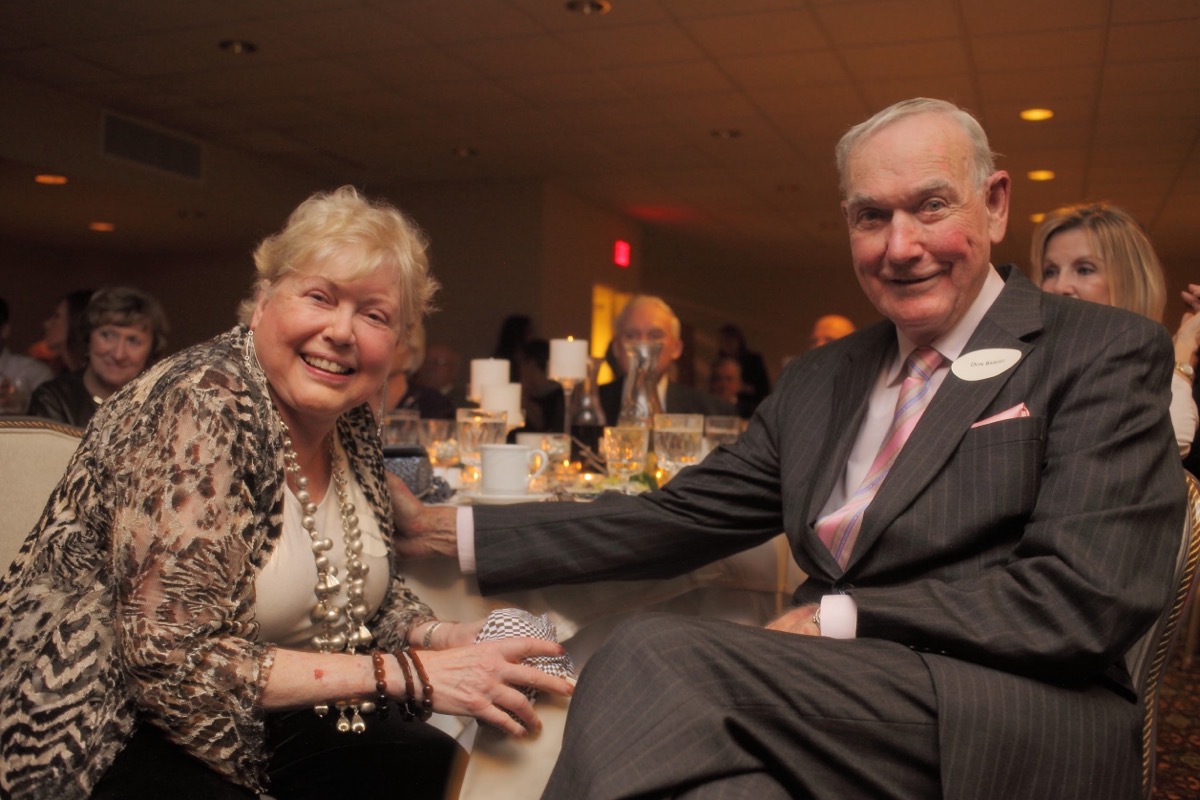
Larger Than Life
Growing up, my grandparents felt larger than life. I suspect many children feel that way about their grandparents, but in their case, the details backed it up.
For starters, they lived in the only house I had ever known that had an elevator inside it, and my grandad drove a car with an actual, hard-wired mobile car phone. My grandma had impeccable taste, and having both grown up in rural New Mexico, their home was always infused with a warm, distinctive Southwest aesthetic—rich textiles, handcrafted pottery, and desert art.
When you grow up in a military family, staying in one place is virtually unheard of. Yet, beginning when I was five or six years old, my family was fortunate enough to live near them in Northern Virginia. Having that kind of geographic stability and regular proximity to your grandparents is rare for Army kids, and I never took it for granted.
Years later, when Danielle and I were engaged, Danielle actually moved onto one of the floors of their home for several months. After we got married, I joined her there, and we spent the first few months of our marriage living under their roof. They were extraordinarily gracious hosts, welcoming us into their daily rhythm with warmth, laughter, and open arms.
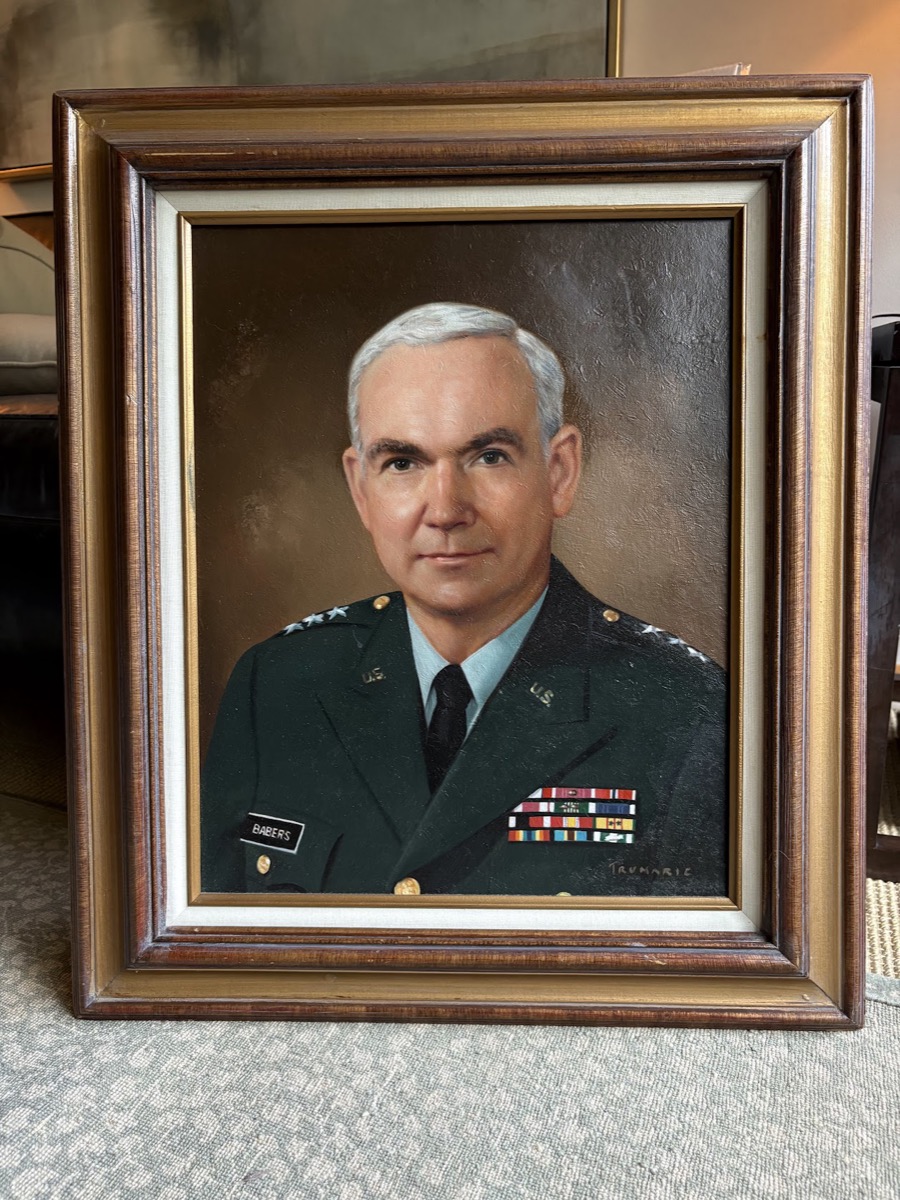
The Tucumcari Babe and the Tank
Growing up around my grandfather meant hearing stories that sounded like folk legends to a young boy.
He was born in Newkirk, New Mexico. When he was just seven years old, his father died in a hunting accident. Left without an income during hard times, the family lived for a stretch in a converted railroad car provided by his father's railroad employer. Don and his brothers cleaned churches, delivered newspapers, and took any odd job they could find to put food on the table.
That grit shaped everything that followed. By high school in Tucumcari, he was an all-around athletic phenom—leading the "Rattlers" to the state basketball championship in 1950 and earning state player of the year honors in football. They called him the "Tucumcari Babe." He went to Oklahoma A&M (now Oklahoma State) on a football scholarship, played basketball for the legendary Coach Hank Iba, and was eventually scouted by the Philadelphia Eagles.
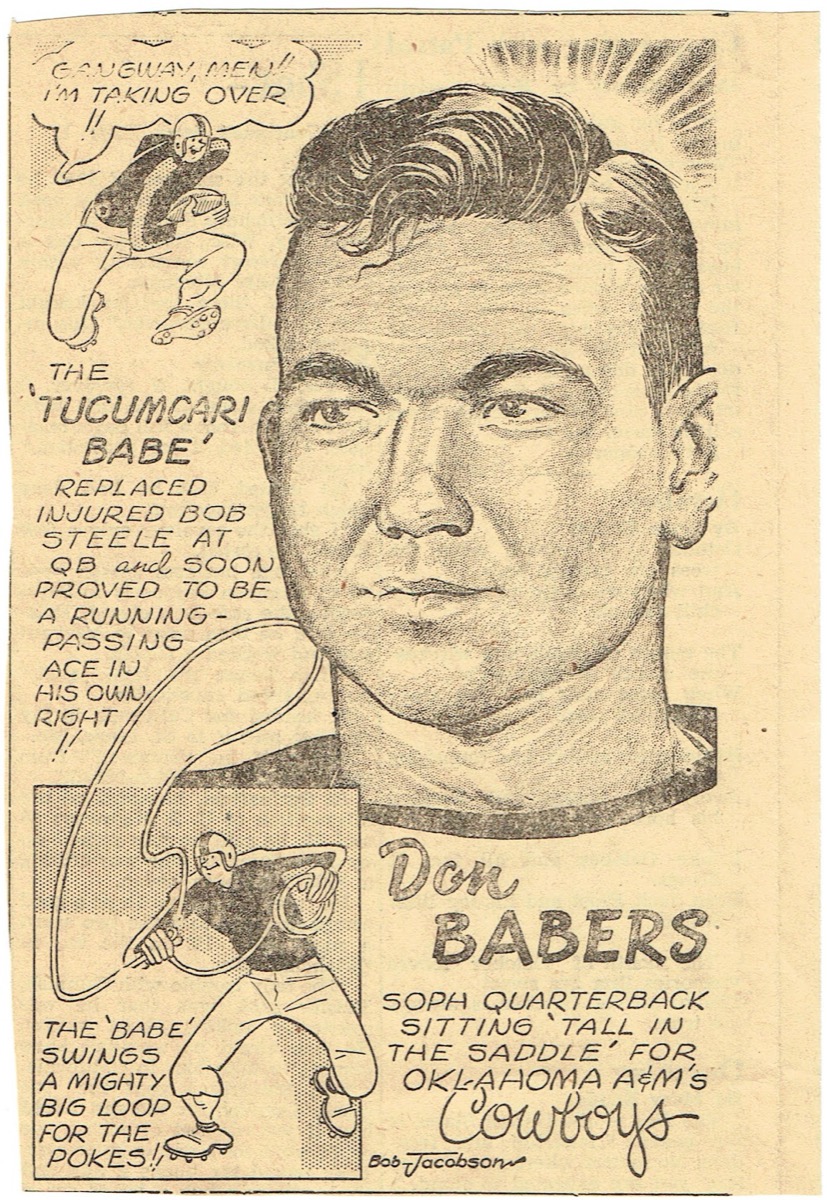
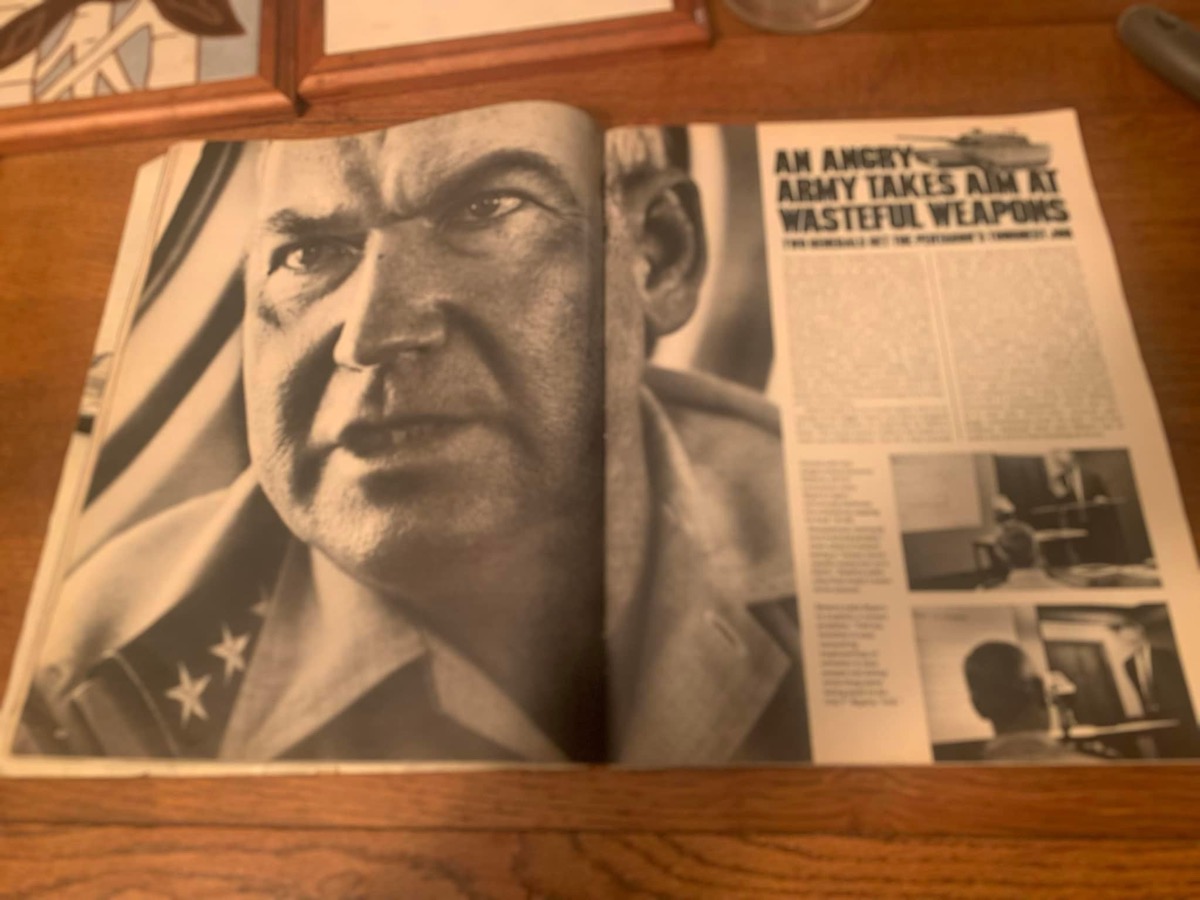
And then there was his military career. Commissioned in 1954 as a second lieutenant in the Ordnance Corps—a branch he admitted he knew virtually nothing about when they first pinned his gold bars on—he steadily climbed the ranks over 32 years of service. He earned a Bronze Star and a Purple Heart in Vietnam, directed the Defense Logistics Agency with over 50,000 personnel, and served as Project Manager bringing the XM1 Abrams Battle Tank from research and development into production.
To a ten-year-old boy, having a grandad who helped design and build the M1A1 Abrams tank wasn't just impressive—it was the coolest thing in the universe. Yet what stood out as I grew older was that his primary engineering obsession on that tank wasn't firepower or speed: it was soldier survivability. He cared deeply about the men and women who would actually have to climb inside it.
"I Went After Him and Made Him Mine"
Yet none of Don Babers's accomplishments happen without Marilyn.
My grandmother was born in 1932 in the tiny farming hamlet of Forrest, New Mexico. Old black-and-white family photos show her as a toddler in diapers sitting on a woven Indian blanket in the red dirt outside their home, flanked by a windmill, an outhouse, a livestock water tank, and a beat-up Model A.
She met Don at a high school "sock hop" in Tucumcari, where students from neighboring rural towns gathered. As Grandma would recount with characteristic swagger decades later: "I went after him and made him mine."
When Don arrived at Oklahoma A&M for summer football camp on his scholarship, the athletic department informed him that student-athletes were strictly forbidden from being married. Don didn't hesitate: he packed his bags, walked away from the scholarship, and went straight home to marry Marilyn on September 14, 1950. Faced with losing their star quarterback, Oklahoma A&M quickly blinked, reversed their policy, and welcomed him back—with Marilyn right by his side.
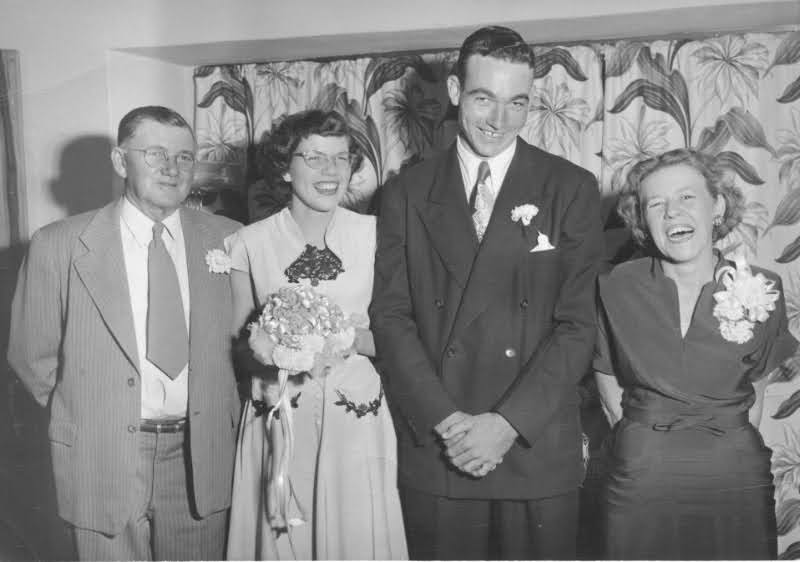
For the next 32 years, through 15 different family relocations across Germany, Oklahoma, Michigan, New York, Kansas, and North Carolina, Marilyn held the center together. She raised four children—including my mother, Donalyn—while Don deployed to Vietnam or ran military commands.
She was vibrant, stylish, and unabashedly flamboyant. She sported white go-go boots, re-papered walls with bedsheets on a whim, loved modern fashion, and regularly conspired with friends to sneak fringe sofas and vintage treasures from military thrift shops into the house before Don got home. In 1974, she was named Army TACOM Wife of the Year for her community leadership and charity work.
She loved people with an intensity that made anyone talking to her feel like the only person in the room. When she became a grandmother, she treated standard rules as polite suggestions—once taking a granddaughter on a trip to New Mexico and bringing her home with newly pierced ears, having decided that seeking grandmotherly forgiveness was vastly preferable to asking parental permission.
The Rocket Launch Principle
When I think of my grandad, I think of a humble, steady, deeply caring man of the highest integrity. When I think of my grandma, I think of a joyful, stylish force of nature who lived to host, laugh, and fill a room with energy.
They were generous to a fault. More than that, they lived the kind of life people dream about: authentic to who they were, fiercely committed to their family, and unconditionally devoted to each other for 74 years.
One saying of my grandad's, which my mom shared with me, has stuck with me throughout my career and my own family life:
Accomplishing something difficult is like launching a rocket. You have to invest most of your energy just to get it off the ground; once you break through, you build the momentum.
He paired that with another simple rule he repeated to his kids and grandkids: "It’s not how smart you might be, it’s how hard you work. So keep at it, don’t give up, and realize all that you can accomplish."
Watching the caisson carry them across Arlington last week, surrounded by four generations of their family, I felt an overwhelming sense of gratitude. They gave everything they had to get their rocket off the ground—and the momentum they created will carry our family for generations to come.